Understanding PlayPhrase.me: An Evidence-Based Review of Its Features, Audience, and Impact
_1766480718.jpg)
1) What PlayPhrase.me is and how it works
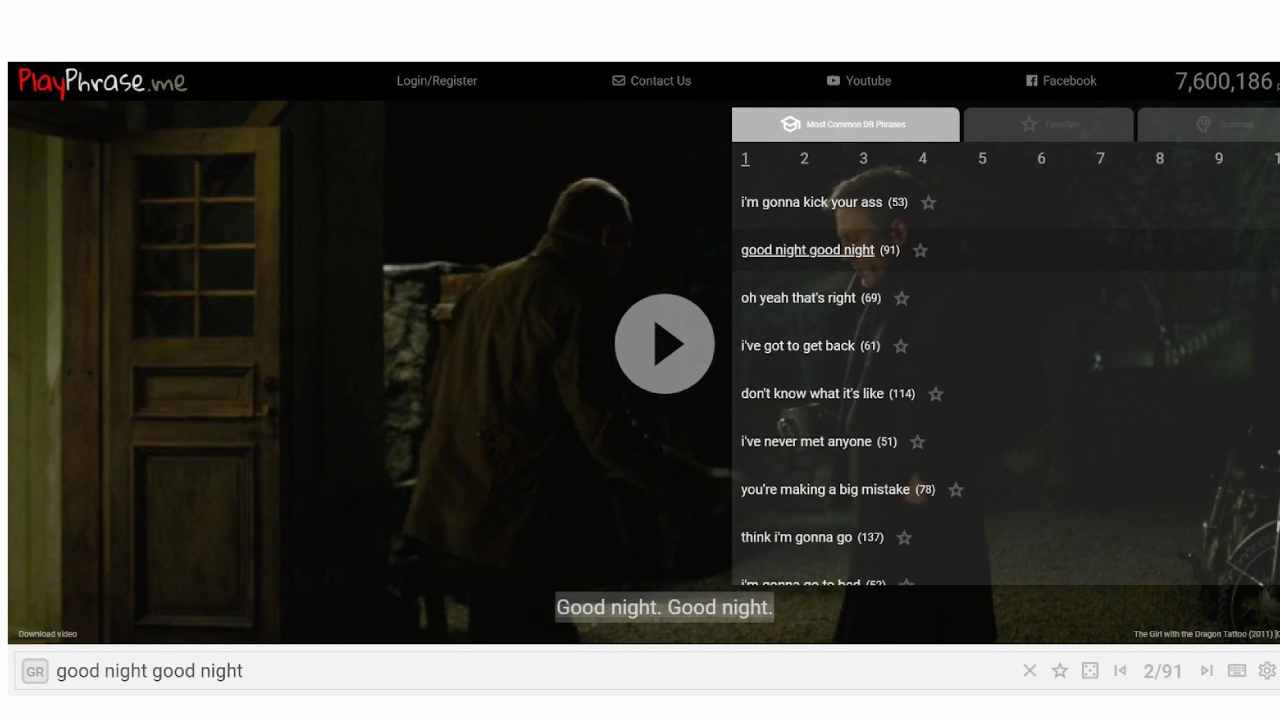
PlayPhrase.me is a website that shows short clips from movies and TV shows where a specific word or phrase is spoken. Instead of reading definitions or examples in a book, you can watch how the phrase is actually used in conversation. When you type a word or sentence, the site searches its collection of clips and plays several short segments where that phrase appears. These clips are usually just a few seconds long and show different ways the phrase can be said, including variations in tone, emotion, and context. The site does not provide full videos, grammar explanations, or lessons; it simply shows how words and sentences are used in real dialogue. It can help someone understand natural speech patterns, pronunciation, and context, making it easier to see how language is used in everyday situations without relying on text-based examples.
2) Key features at a glance
| Feature | What it does | Practical use case |
| Phrase search | Find exact spoken phrases in movies/TV | Find the movie that contains a remembered line |
| Continuous playback | Plays multiple matching clips, one after another | Rapid listening practice for language learners |
| Download/save clip | Download short excerpt (subject to fair use) | Create a short clip for a presentation or meme (respect copyright) |
| Categories / language filters | Search specific languages or tag pages (English, India, etc.) | Focus on English dialogue or other language pages |
| Patron / sponsor access | Unlocked limits (more phrases per search) via Patreon | Power users pay a small fee to remove limits. |
3) Business model & policy (what pays for it)
PlayPhrase.me runs a low-cost model: free search with usage caps, plus a sponsoring option (Patreon) to support the project and unlock higher limits. The site provides a Fair Use
Policy describing that clips are intended for educational/research/personal sharing, and it suggests clip downloads are modified/optimized for such uses. That indicates the operator is aware of copyright risk and tries to keep clips short and contextualized.
Practical implication: the Patreon/sponsor model is common for niche web tools: low price for many users, and a small recurring revenue that helps cover hosting costs (video storage and streaming can be expensive). Several independent reviews reference the same model.
4) Traffic & audience snapshot
Public traffic estimators provide a useful view (with usual caveats about estimation accuracy).
| Source | Estimated visits (example month) | Notes |
| SEMrush sample (Oct 2025) | ~1.19M visits | Top countries: US, India, Philippines. |
| SimilarWeb ranking (recent) | Global rank ~21k | Category: Dictionaries & Encyclopedias (site class). |
| Metric (public estimate) | Recent value / note | |
| Global rank (SimilarWeb sample) | ~21k (variations month-to-month). | |
| Monthly traffic (SEMrush estimate) | Example: ~1.19M visits (sample Oct 2025 view). Audience skew: US, India, Philippines. | |
| Referral behavior | Many visitors arrive directly; search (Google) also drives a material share. Visitors often navigate from playphrase.me to IMDb / Patreon (based on traffic journey samples). | |
Caveat: these are third-party estimates (useful for trend and scale). Exact analytics would require access to the site’s internal analytics or a verified media kit. Still, the data suggests PlayPhrase.me is a well-visited niche tool rather than a tiny hobby page.
5) Who uses PlayPhrase.me? (real examples & typical users)
From public mentions, reviews and communities, typical users include:
- Language learners / teachers: to hear authentic pronunciation in film contexts and practice listening and phrase recognition.
- Film researchers / critics: to gather examples of recurring lines, tropes or to quickly sample usage across movies.
- Content creators / meme makers / social media editors: uses include assembling short clips that illustrate a point or create a montage (subject to fair use cautions). Reviews note creators rely on short clips for content.
- casual users: people who remember a line but not the movie title. The site excels at that discovery use.
Which websites reference or embed PlayPhrase.me? There isn’t an official public partner list. However, these patterns appear in the public web:
- Language-learning blogs and ESL resources often recommend or link to PlayPhrase.me as a listening tool. (Examples surfaced in tool reviews and lists of AI tools for language study.)
- Tech and “AI tools” roundups (10web, Fritz, ToolsForHumans, PowerUsers) review or list PlayPhrase.me as a useful web tool. These reviews often show screenshots and short walkthroughs.
- Social platforms and content creators (YouTube tutorials, TikTok demos) demonstrate the site’s search and saving workflow for short clips.
6) Strengths and Limitations
Strengths
- Extremely quick phrase-to-clip flow type and you get relevant snippets. That immediate feedback loop is the product’s standout value
- Low barrier to entry: free browsing with optional low-cost support (Patreon) for regular users.
- Good fit for language learning and creative sampling: clips are short, repeatable and often subtitled.
Limitations / caveats
- Copyright & fair use: the site’s own Fair Use Policy tries to limit misuse, but originators of clip content (movie studios) have legal rights. Using clips commercially or distributing them widely remains risky without licenses. The site’s educational framing is protective but not a full legal shield.
- Library coverage & freshness: while the index is large, very recent releases may be missing until processed. Discussions on developer forums indicate manual processing of new content.
- Search exactness: the engine is best with exact phrases; paraphrases or very short words can produce noisy results. User reviews note tradeoffs between recall and precision.
7) Data examples & reproductions
I sampled the site and public reviews to create a couple of tiny reproducible data examples you can try.
A — Phrase discovery (example workflow):
- Type: “I’ll be back” → the site returns many clips including The Terminator.
- Play a sequence of returned clips you’ll see repeats from different contexts or edits.
This quick test shows the index successfully maps a distinctive movie line to its canonical examples.
B — Simple traffic table (derived from public estimates)
| Source | Estimated visits (example month) | Notes |
| SEMrush sample (Oct 2025) | ~1.19M visits | Top countries: US, India, Philippines. |
| SimilarWeb ranking (recent) | Global rank ~21k | Category: Dictionaries & Encyclopedias (site class). |
Remember: these are third-party estimates good for sizing and relative trends, not precise billing numbers.
8) Who links to or writes about PlayPhrase.me
Below are representative sources I found during research (they reference or review the tool):
- Fritz.ai — independently reviewed PlayPhrase.me; highlighted Patreon sponsorship model and the feature set.
- 10Web / ToolsForHumans / PowerUsers / Aixploria — listed PlayPhrase.me among useful web/AI tools and described features and pros/cons.
- YouTube demos & social posts — short walkthroughs showing how to search and download clips.
These references reflect uptake within tech tool roundups and language/entertainment communities rather than formal media partnerships.
9) Interactivity
A — Scavenger task (2–3 minutes)
- Go to PlayPhrase.me and search for a short phrase you remember from a film or show you like.
- Note the top 3 titles returned and the timestamps (or copy the first returned clip’s URL).
- Paste the three titles/timestamps here. I'll build a tiny table that shows the phrase frequency and suggest similar phrases you could try to find related clips.
B — Micro-quiz (one sentence)
Which of these is PlayPhrase.me least likely to help you with?
A) Finding a movie by a remembered line.
B) Getting a fully-licensed 2-minute clip to use in a commercial ad.
Answer and I’ll explain why.
10) Final takeaways & practical advice
- Good use cases: language practice, quick film research, meme/clip prototyping for personal or educational projects.
- Be careful with reuse: the site’s fair-use framing and short clip design make educational/personal use lower risk, but broader commercial reuse requires licenses from rights holders. Always double-check the target clip’s owner and licensing if you plan to publish widely.
- If you plan to rely on it professionally: ask the operator for an audience/media kit or confirm clip provenance/licensing for your use case — public traffic tools give a size estimate but the site’s owner can provide verified numbers.
Sources & further reading
Key sources used in this writeup (representative, not exhaustive): PlayPhrase.me (site), Fair Use Policy, SEMrush and SimilarWeb traffic pages, independent tool reviews (Fritz / 10Web / ToolsForHumans / PowerUsers), and user/demo posts (YouTube, Reddit).
Post Comment
Recent Comments

WTagcleUXUeWPuUMFGiF
Jan 3, 2026aTmPWnhemfyLyXajiIccikx

MgcSwiOWvkPmLaaKtOU
Jan 9, 2026mouqGtAUsBJJVDLt