
BrumeBlog.com Review: A One-Author Blog Trying to Cover the Whole Internet
BrumeBlog.com does not look like a suspicious website at first glance, and that is not the most useful question to ask. The better question is whether it behaves like a trustworthy publication. The site publishes across business, finance, technology, health, pets, lifestyle, travel, education, sports, entertainment, and general web topics, often under one visible author profile. That gives BrumeBlog range, but it also creates a clear editorial problem: can one broad blog cover so many subjects with enough depth?
This review looks at BrumeBlog.com as a publishing site, not just a domain. The focus is on how the site behaves, how the content is written, what the author model suggests, where the site is useful, and where readers should be more careful.
The Site Is Real, but That Is the Easiest Question
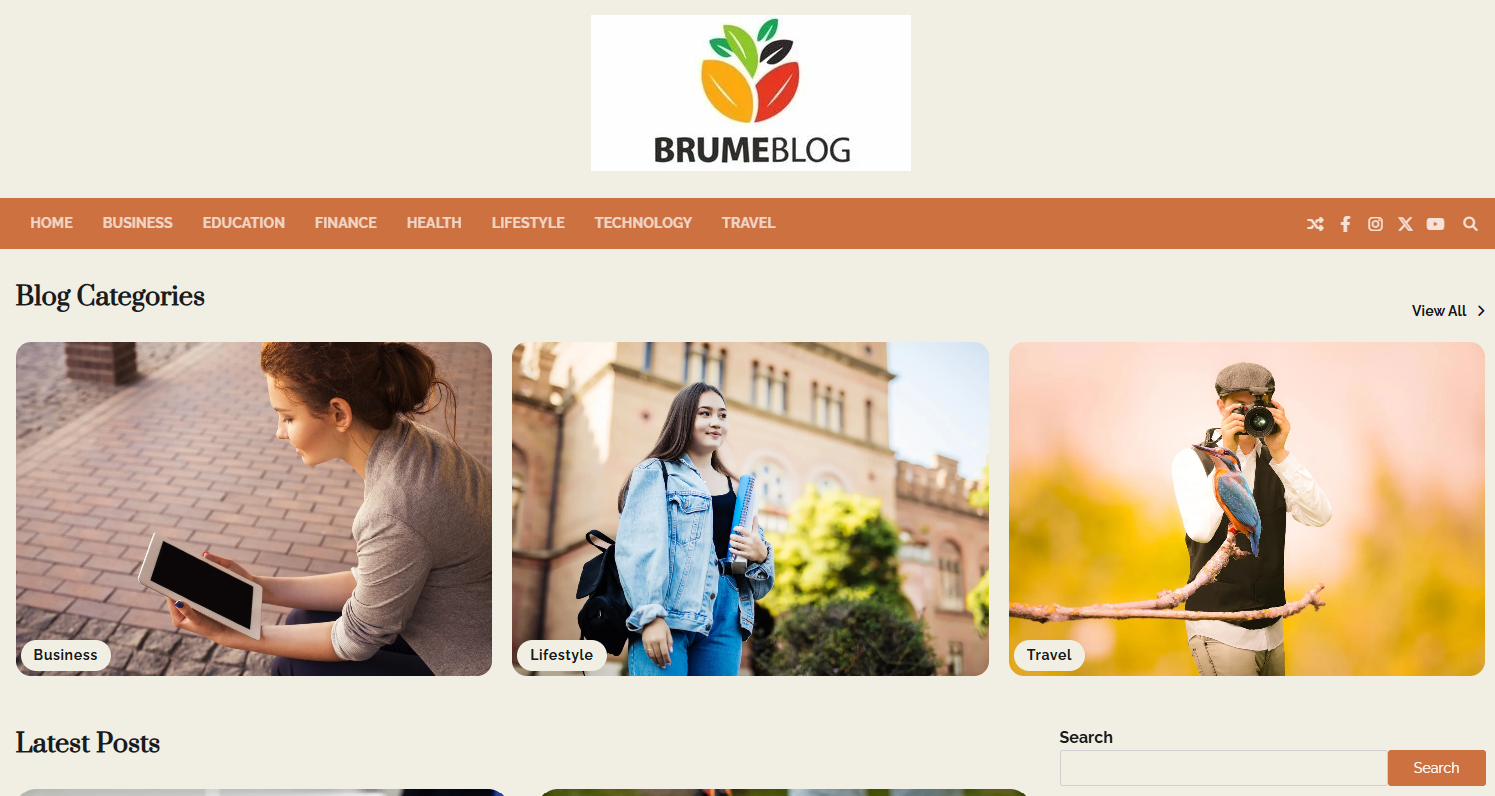
BrumeBlog.com is a real multi-niche blog. It has published posts, visible categories, author attribution, and a general magazine-style identity. It is not a SaaS product, not an AI tool, not an ecommerce store, and not a specialist newsroom. It is a broad content website built around informational articles.
That matters because many website reviews stop at the wrong question. Asking “Is BrumeBlog real?” does not tell readers enough. The site exists, loads normally, and has visible content. The more useful review question is this: how much trust should readers place in its articles?
BrumeBlog behaves like a general publishing platform. It covers everyday internet topics, including business advice, learning tools, online services, websites, technology, finance, pets, and lifestyle content. That makes it useful for casual browsing. But the same variety also makes it harder to treat as a specialist source.
| Area | What It Means for BrumeBlog.com |
| Website type | Multi-niche blog |
| Main function | Publishes informational articles |
| Strongest value | Broad topic discovery |
| Main weakness | Limited specialist authority |
| Best audience | Casual readers and beginners |
| Caution area | Finance, health, technology buying, and expert advice |
BrumeBlog.com is not a fake-looking site. It is better described as an active general blog with mixed authority signals.
The Publishing Pattern Says More Than the Homepage
The most important clue on BrumeBlog is not the homepage design. It is the publishing pattern. The site does not stay inside one tight niche. It moves across many unrelated subjects, which makes it feel more like a content hub than a focused publication.
A focused finance blog would usually have finance writers, market context, regulatory caution, updated figures, and strong sourcing. A focused pet blog would usually show animal care experience, breed-specific insight, safety details, and practical examples. A focused technology review site would usually include screenshots, testing notes, pricing checks, and product comparisons.
BrumeBlog does not consistently present itself in that specialist way. It publishes across many areas with a similar general-blog tone. That does not make the content useless, but it changes how readers should use it.
The site is best read as a starting point. It can introduce a topic, give simple background, or help users understand common terms. It should not be the only source for decisions involving money, health, safety, or product purchases.
One Author, Many Categories: Helpful or Concerning?

One visible pattern on BrumeBlog is the presence of a clear recurring author profile across many posts. This is better than anonymous publishing. A named profile gives the site some accountability because readers can see who is associated with the content.
But the same author appearing across several unrelated categories also creates a trust gap. It is difficult for one person to show deep expertise in finance, health, pets, business, technology, travel, education, and lifestyle at the same time unless the site clearly explains the editorial process behind the articles.
That is the central issue with BrumeBlog’s author model. The problem is not that one person runs or writes for a broad blog. Many independent publishers do that. The problem is that broad authorship needs extra transparency. Readers should know whether the author is writing from personal experience, research, contributor input, editorial review, or general content production.
| Author Signal | Positive Side | Limitation |
| Visible author profile | Better than anonymous posts | Does not prove expertise in every category |
| Same author across many topics | Creates consistency | Makes subject authority harder to judge |
| Multi-niche publishing | Covers many reader interests | Can feel stretched |
| Basic author identity | Adds accountability | Needs deeper professional background |
| No clear category experts | Keeps the site simple | Weakens trust for sensitive topics |
This is not a reason to dismiss BrumeBlog. It is a reason to read it with the right expectation. The site has visible authorship, but not enough specialist proof to treat every post as expert-led.
The Writing Is Clear, but the Expertise Is Harder to See
BrumeBlog’s content is usually easy to read. The language is simple, the topics are practical, and the structure is built for readers who want quick answers. That makes the site accessible, especially for people who are not looking for technical detail.
The writing style works best when the topic is low-risk. A general article about online learning, lifestyle choices, web tools, travel ideas, or simple business concepts can be useful even if it is not deeply expert. Readers can take the information as a light overview.
The weakness appears when the topic requires stronger proof. Finance, health, legal-adjacent advice, product recommendations, and technology buying guides need more than simple explanation. They need updated facts, direct examples, expert review, or clear evidence.
BrumeBlog’s writing often explains a topic, but it does not always show how the writer reached the conclusion. That is the difference between content that is readable and content that is authoritative.
What the Writing Gets Right
● It is easy for beginners to follow: The articles usually avoid heavy technical language, which makes them useful for readers who want a simple introduction.
● The topics are practical: Many posts are built around everyday questions, online tools, general services, or common decision-making topics.
● The format is scan-friendly: Headings, short sections, and direct explanations make the content easy to move through.
● The site does not feel abandoned: Active publishing gives the blog a maintained feel, which is better than outdated content libraries.
Where the Writing Needs More Depth
● The articles need more original evidence: Stronger posts should include examples, testing notes, screenshots, user feedback, statistics, or first-hand observations.
● Expert topics need expert treatment: Health, finance, and technical advice should include stronger review signals or clear disclaimers.
● The author perspective needs more detail: Readers should be able to tell whether the author tested something, researched it from public sources, or summarized general information.
● The site needs clearer sourcing habits: Claims become more reliable when readers can see where important information comes from.
BrumeBlog’s Biggest Strength Is Accessibility
BrumeBlog works best as a light research and discovery site. It gives readers quick entry points into many topics without forcing them through dense industry language. That can be useful for casual users who simply want to understand a subject before searching deeper.
The site’s broadness can also be useful. A reader may visit for one topic and find other related posts across business, technology, education, or lifestyle. This magazine-style variety makes BrumeBlog easy to browse.
Its accessibility is strongest in topics where the stakes are low. For example, a general overview of online tools, learning platforms, productivity ideas, or basic lifestyle topics does not always require specialist reporting. In those cases, BrumeBlog’s simple style can be enough.
The site becomes less convincing when the topic demands precision. A finance post should not be treated the same way as a lifestyle tip. A health article needs stronger confidence than a general web guide. A technology review should show more testing than a basic explanation.
That is where readers need to separate usefulness from authority.
BrumeBlog’s Biggest Weakness Is Category Stretch
The biggest weakness of BrumeBlog is not one bad article. It is the amount of territory the site tries to cover.
A broad blog can work if it has a clear editorial system. Large publications cover many categories because they have different writers, editors, reviewers, and subject specialists. A smaller blog can also cover multiple topics, but it needs to be transparent about how the content is produced and reviewed.
BrumeBlog’s challenge is that many categories appear under a similar publishing voice. Finance, pets, health, technology, lifestyle, and business should not all feel like the same level of general advice. Each category has different reader risks.
| Category | Reader Risk | What Stronger Content Should Show |
| Finance | High | Updated facts, risk warnings, expert context |
| Health | High | Qualified review, safety notes, clear disclaimers |
| Technology | Medium | Hands-on testing, screenshots, pricing checks |
| Business | Medium | Real examples, data, practical context |
| Pets | Medium | Safety details, experience, care guidance |
| Lifestyle | Low to medium | Practical examples and clear advice |
| Travel | Low to medium | Specific details, dates, location accuracy |
The broader the site becomes, the more important expertise signals become. BrumeBlog has reach, but it needs more visible depth to make that reach fully convincing.
The Trust Gap: Not Fake, Not Fully Authoritative
BrumeBlog sits in the middle. It is not fair to call it fake simply because it covers many topics. The site has real content, visible authorship, and a functioning blog structure. It appears to be maintained and intended for readers.
At the same time, it is also not fair to present it as a deeply authoritative publication. The site does not clearly show the level of author specialization, editorial review, sourcing discipline, or category-specific expertise that readers should expect from a strong expert publication.
The trust gap comes from missing context. Readers can see the content, but they cannot always see the process behind the content.
Important questions remain unclear:
● Who reviews articles before they are published?
● Are guest posts accepted, and are they clearly labeled?
● Are finance or health articles checked by qualified reviewers?
● Are product or tool reviews based on direct testing?
● Are articles updated when facts change?
● Is there a correction policy?
● Are sponsored links or paid placements disclosed clearly?
These questions matter because trust is not only about whether a site exists. Trust comes from process, accountability, and transparency.
Who Should Read BrumeBlog and Who Should Verify First?
BrumeBlog can be useful, but not for every purpose. The right way to use it depends on what the reader is trying to do.
| Reader Type | Should They Use BrumeBlog? | Best Way to Use It |
| Casual readers | Yes | Use it for light reading and general information |
| Beginners | Yes | Use it to understand basic ideas |
| Students or researchers | With caution | Use it as a starting point, not a citation source |
| Finance readers | Carefully | Verify claims with stronger financial sources |
| Health readers | Carefully | Do not rely on it for medical decisions |
| Tech buyers | With caution | Check official pricing, features, and user reviews |
| Business readers | Selectively | Use broad ideas, but verify important claims |
| Guest post evaluators | Possibly | Review editorial standards before contributing |
The best reader for BrumeBlog is someone looking for simple, general information. The worst use case is relying on it alone for sensitive decisions.
BrumeBlog.com Pros and Cons
| Pros | Cons |
| Easy to read | Broad niche weakens authority |
| Covers many everyday topics | One author across many categories raises expertise questions |
| Visible author profile | Author bio needs more detail |
| Active publishing pattern | Content depth appears uneven |
| Useful for beginners | Not ideal as a final source for important decisions |
| Good for topic discovery | Needs clearer editorial and disclosure policies |
Is BrumeBlog.com Legit?
BrumeBlog.com appears to be a legitimate multi-niche content site. It has published posts, visible categories, and author attribution. It does not behave like a completely anonymous or empty domain.
But legitimacy has levels. A site can be legitimate and still not be highly authoritative. That is where BrumeBlog fits. It is useful as a general blog, but readers should not assume every article is expert-reviewed or deeply researched.
The most accurate answer is this: BrumeBlog is legitimate as a content website, but its reliability depends on the topic. Low-risk topics can be read casually. High-risk topics should be checked against stronger sources.
Final Verdict: Useful Range, Limited Authority
BrumeBlog.com is an active, readable, multi-niche blog with one clear strength: accessibility. It gives readers simple explanations across a wide range of topics and can be useful for quick discovery. The site does not feel fake or abandoned, and the visible author profile adds a basic layer of accountability.
Its weakness is authority. The same broad author pattern across many categories makes it difficult to treat the site as specialist-led. Finance, health, technology, pets, business, and lifestyle all require different kinds of knowledge, but BrumeBlog does not always show enough editorial depth to prove expertise in each area.
The best way to view BrumeBlog is as a general information site, not a final authority. It can help readers understand a topic, collect ideas, or begin research. But for important financial, health, technical, or product-related decisions, readers should verify the information through more specialized and transparent sources.
BrumeBlog.com is not a site to dismiss. It is a site to read with context. Its range is useful, but its trust depends on how clearly it can show expertise, sourcing, and editorial process behind the content.
Post Comment
Recent Comments

xemxhohjzl
May 29, 2026vuqoltxzxhhzznuxjymnukehjnduos





dxzoxmdwmu
May 29, 2026kuhxylhvwirrlwnrpqnrsqpjdyeged