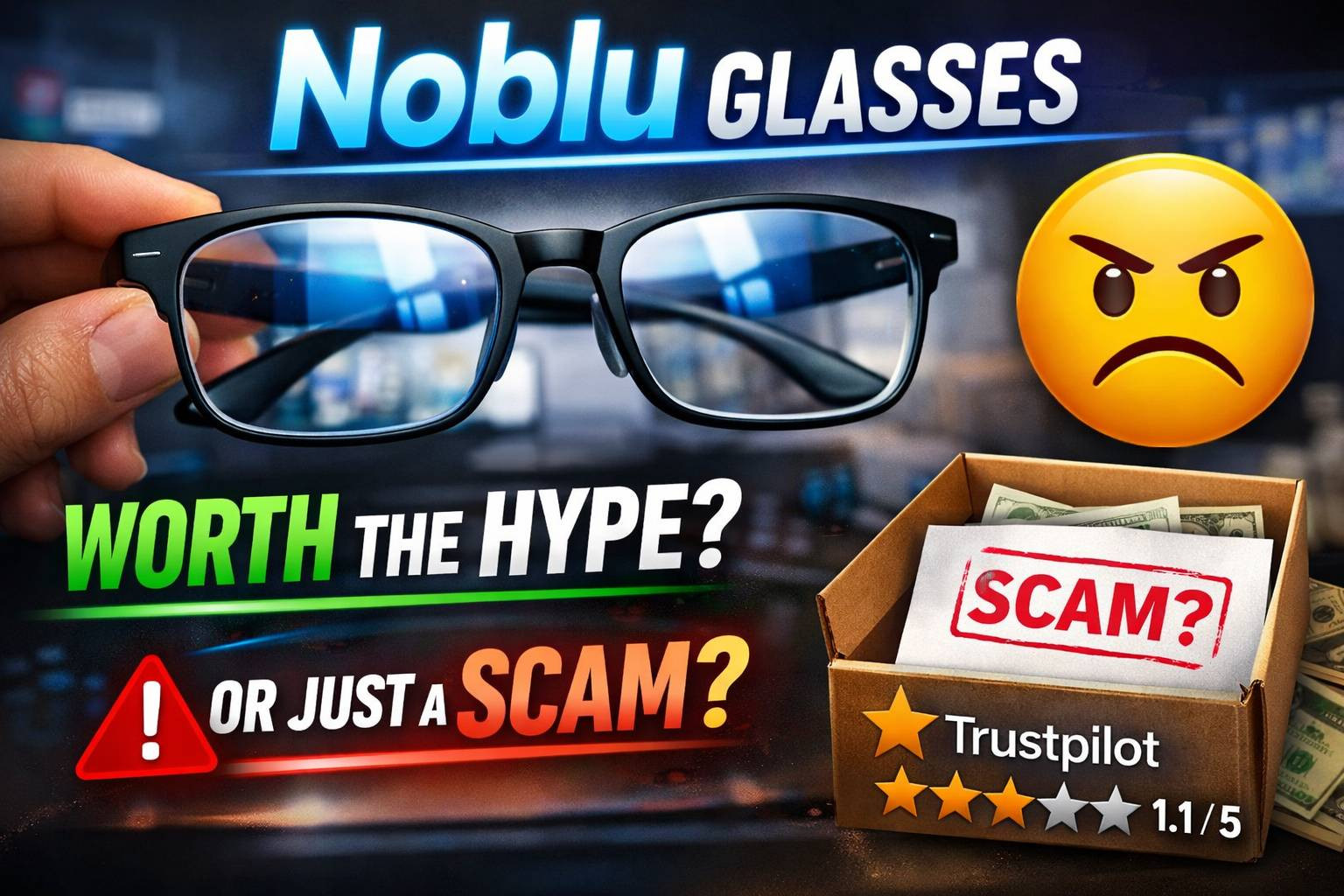
Noblu Glasses Review : An Honest Look at the Hype, Reality & What Users Really Say
In recent years, glasses claiming auto-focus, smart vision correction, and blue light protection have flooded social media ads and Noblu Glasses are one of the most talked-about examples. I ordered a pair, tried them myself, and combed through real user reports online to find out whether the product actually lives up to the marketing or falls flat.
Here’s the truth you need before you decide to buy.
What Noblu Glasses Claim to Do
Noblu Glasses are promoted as a “smart” eyewear solution that can replace multiple pairs of glasses. The brand suggests that their lenses are able to adjust focus automatically as your eyes move between near and far objects. In other words, you are not supposed to switch between reading glasses, screen glasses, and distance glasses. One pair is claimed to handle everything for you.
This idea is extremely appealing, especially for people who struggle with eye strain, blurry vision, or age-related vision changes. The marketing makes it sound as if the glasses can “sense” where you are looking and instantly correct your focus, similar to how a camera adjusts its lens.
Another major claim revolves around blue-light protection. Noblu says the lenses can filter blue light coming from phones, laptops, and tablets. Blue light is often blamed for tired eyes, headaches, and disturbed sleep. Because of this, the company suggests that wearing their glasses during long screen sessions can reduce discomfort and help you feel more relaxed at the end of the day.
The brand also positions Noblu as a convenient all-in-one solution. Instead of carrying separate pairs of glasses for reading, office work, and outdoor viewing, you are told that Noblu can handle all situations. This promise alone makes the product sound revolutionary, because traditional glasses require precise prescriptions and different lens powers for different tasks.
Comfort is another big part of the sales message. Noblu claims their frames are lightweight, pressure-free, and suitable for wearing for hours without discomfort. They are also marketed as stylish and modern, so users can feel confident wearing them both at home and in public. The design is meant to look premium and trendy, even though the glasses are promoted as a budget-friendly alternative to prescription eyewear.
When all these claims are combined, Noblu is presented as a smart, futuristic product that can protect your eyes, improve your vision, and replace several pairs of glasses at once. It sounds like the perfect solution for people who are tired of eye strain and constant switching between lenses.
However, while these promises sound impressive, they are mostly based on marketing language rather than proven technology. Real adaptive lenses normally require complex electronics or specialized optical systems, which are not visible or explained in Noblu’s design. This is why many users and reviewers question whether these features actually exist in the product.
First Impression: Stylish Look, But What About Quality?
When you first take Noblu Glasses out of the box, your initial reaction might be positive. The design looks modern and trendy frames that appear sleek, contemporary, and similar to those you might see in lifestyle ads or fashion spreads. Many users report that, at a glance, these glasses look like something that should be more expensive than they really are. They have a lightweight feel that makes them comfortable to put on right away, and at first sight they seem like a fun accessory for screen time or daily wear.
However, this initial excitement often fades quickly as you inspect and use them more closely. The most noticeable issue that many users, including myself, encounter is the build quality. Under that appealing exterior, the materials feel noticeably thin and cheap. Instead of the solid, durable plastic or metal you’d expect in quality eyewear, the frames and hinges feel flimsy. The plastic feels lightweight in a way that suggests fragility rather than comfort.
This isn’t just a minor feeling of “not premium.” In real use, it becomes apparent that the glasses might not withstand regular wear and tear very well. Many buyers report that the lenses scratch easily, even with careful handling, and the frames can bend or loosen quickly after repeated use. Some even felt the glasses were significantly lighter than expected, almost unnervingly so like toy glasses rather than functional eyewear.
Another aspect that stands out when you first wear them is the lack of weight and presence on your face. For some people, this can be a comfortable experience at first, especially if you dislike heavy glasses. But others find that the lightness contributes to a sense that the product isn’t robust or designed for long-term use. It’s the difference between comfortable minimalism and cheap construction, and many reviewers lean toward the latter.
The initial sleek look also doesn’t translate into better optical quality. The lenses feel like very basic plastic with no real optical coating or refinement. When you tilt them in the light, they don’t show the multi-layer coatings or depth that good quality lenses have. Instead, they look flat, plain, and without much optical precision.
What many users expected based on the marketing imagery was a blend of style and substance. The frames looked promising, and the modern design paired well with the high-tech claims made in ads. But once you put them on and start using them, the reality becomes clear: the stylish look does not match the feel of a product made with quality parts or craftsmanship. You’re left with eyewear that seems fashionable at first glance but lacks the solidity and durability that make glasses worth owning long term.
This mismatch between style and substance is one of the most common early impressions reported by buyers. The glasses may look good in promotional photos or lifestyle spreads, but in everyday use, the difference in material quality and construction becomes painfully obvious.

What the Data Says: Real User Sentiment
Here’s an approximate breakdown of user feedback from independent platforms, forums, and scam-alert websites:
User Sentiment Chart
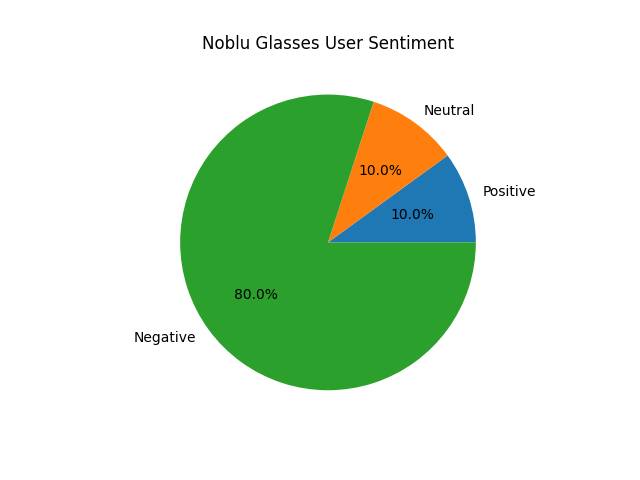
This visual tells a clear story: most users are disappointed or frustrated with Noblu Glasses.
Common Issues Users Have Reported
Below are some recurring problems people describe after buying Noblu Glasses:
Vision & Effectiveness
● The advertised auto-focus or adaptive vision rarely works in real use; most users see no improvement in near or far vision.
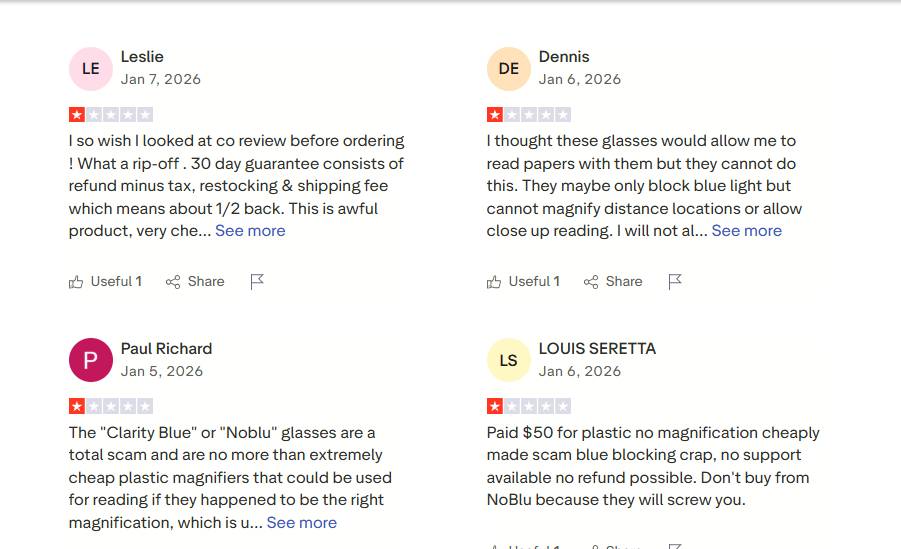
● Many buyers report the glasses feel like standard clear lenses or basic readers.
Quality and Build
● Lenses can arrive scratched, frames feel weak, and the overall impression is low-quality plastic rather than advanced optics.
Customer Service and Refund Problems
● Numerous users state customer support is slow or unresponsive when they try to ask for a refund.
● Many buyers are offered partial refunds or told they must pay return shipping often internationally making the refund process expensive or impractical.
Advertising & Trust Concerns
● Noblu’s website displays major news logos like The New York Times and NBC, but no actual links or proof exist that these outlets reviewed or endorsed the product.
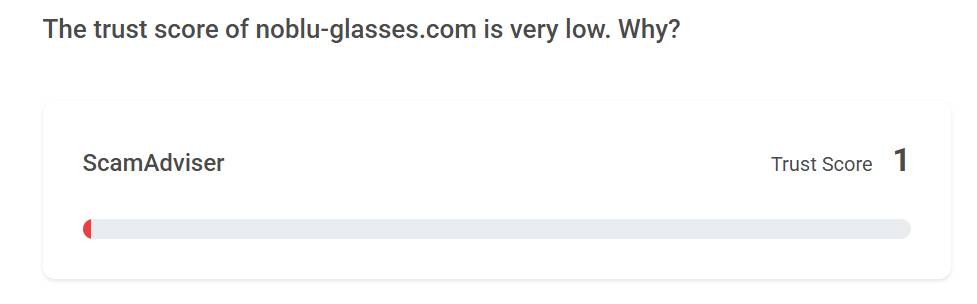
● Third-party trust checkers assign low trust scores and mark the site as suspicious.
Pricing Reality & Value
One of the biggest pain points for buyers is the gap between Noblu’s pricing and the actual value delivered. Most customers report paying anywhere between $40 and $80, depending on discounts, bundles, or limited-time offers shown on the website. At first glance, this price may seem reasonable for a product marketed as smart, adaptive eyewear. However, the problem arises once users realize what they’ve actually received.
After purchase, many buyers discover that the glasses are visually and functionally similar to generic blue-light or reading glasses sold on large marketplaces like AliExpress, Temu, or Amazon, often priced below $10. These alternatives may lack bold marketing claims, but they deliver roughly the same real-world experience in terms of lens clarity and build quality.
What frustrates users the most is not just the price itself, but the expectation gap. Noblu’s marketing suggests advanced optical technology, innovation, and premium performance. When the product turns out to be basic plastic frames with standard lenses, the higher price feels unjustified. Many reviewers describe this as paying a “tech premium” for features that don’t actually exist.
Another factor affecting perceived value is the refund experience. Several customers say they would have been more forgiving about the price if returns were simple. Instead, users report partial refunds, slow responses, or being asked to ship products internationally at their own expense. This further reduces the product’s value, especially when compared to cheaper alternatives with easier return policies.
From a value-for-money perspective, Noblu Glasses struggle to justify their cost. If the glasses delivered even moderate adaptive vision benefits, the pricing might make sense. But without measurable performance improvements, users feel they’re paying mostly for branding and advertising rather than functionality.
In short, while Noblu Glasses are positioned as an affordable alternative to prescription eyewear, many buyers conclude that they are overpriced for what they offer. When nearly identical products are available for a fraction of the cost, the value proposition becomes difficult to defend.
Pros & Cons
| Pros | Cons |
| Lightweight and comfortable frames for casual wear. | Claims of auto-focus and adaptive vision are not supported by users or independent testing. |
| Simple, modern design that some buyers like aesthetically. | Poor build quality, flimsy plastic and easily scratched lenses. |
| A few users report slight blue-light glare reduction. | Marketing includes misleading tactics like countdown timers and fake media logos. |
| Can function as basic non-prescription eyewear for casual use. | Customer service is often unresponsive and refunds are difficult or partial. |
| Affordable compared to prescription lenses (if you only need simple readers). | Overall product performance fails to match advertised benefits, causing disappointment. |
Final Verdict: Should You Buy Them?
If you’re expecting smart, adaptive vision correction no, these glasses are not worth it.
The core advertised features don’t work in real use and are not backed by scientific validation or trusted certification.
If you simply want an inexpensive, lightweight pair of casual eyewear with possible minor blue-light filtering, they might serve that limited purpose but don’t expect miracles.
Conclusion
Noblu Glasses generate a lot of buzz online through flashy ads and big claims, but when it comes to actual performance and user experience, the reality is overwhelmingly underwhelming. Real users report poor build quality, no real vision benefits, and refund frustrations. Independent review and scam-alert sites also raise several red flags about the product’s legitimacy.
Before making a purchase, always check verified third-party reviews and trust signals rather than relying on promotional content.
Post Comment
Be the first to post comment!