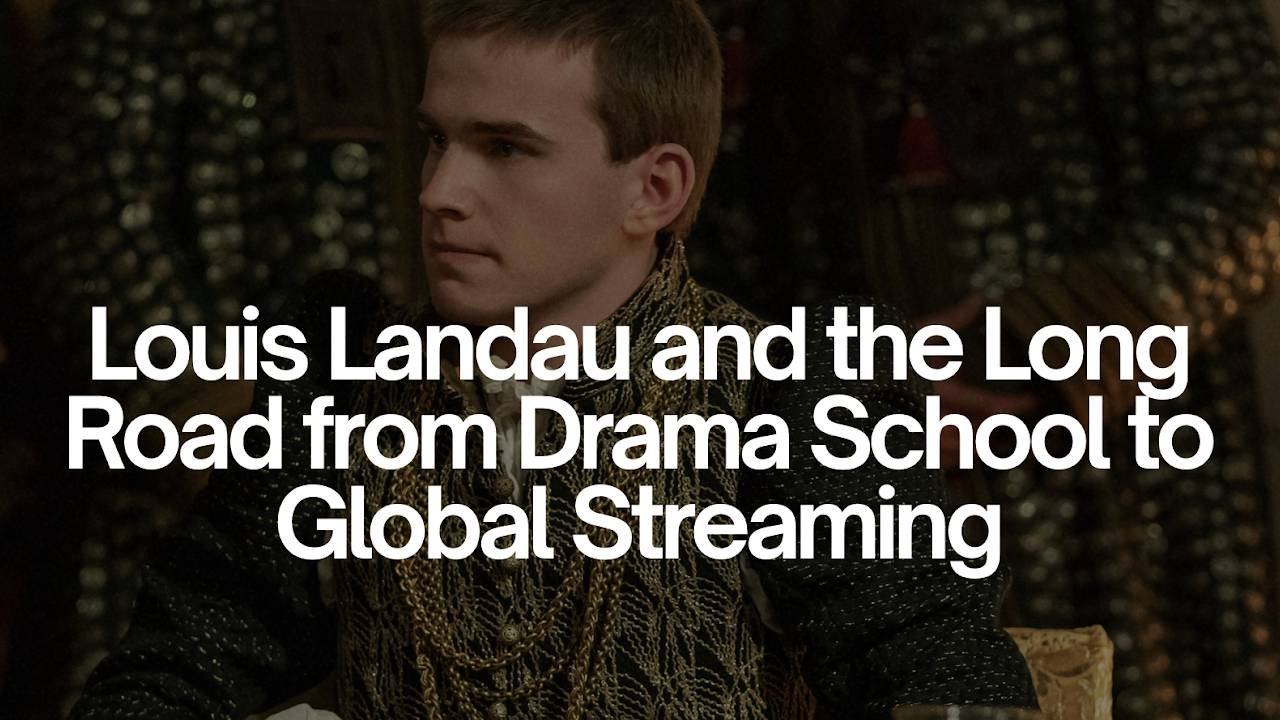
Louis Landau and the Long Road from Drama School to Global Streaming
Louis Landau is not a celebrity story built around overnight success or viral recognition. His career so far is better understood as a slow accumulation of craft, credibility, and positioning, shaped by formal training, sustained theatre work, and a steady movement into international television. What makes his trajectory interesting is not just where he has landed, but how closely it mirrors the contemporary path of British actors navigating the streaming era.
Rather than framing him as a breakout star, this article looks at training, labour, role selection, and industry context. It traces how Landau moved from drama school stages to ensemble television, and what that movement reveals about casting, performance, and identity in modern screen culture.
Early life and professional grounding

Public records and industry profiles place Louis Landau as a London-based British actor, though much of his formative work was shaped outside the capital. He trained at the Guildhall School of Music and Drama, one of the UK’s most selective and tradition-heavy drama institutions, graduating as part of the 2019 to 2020 cohort.
Guildhall’s training model emphasizes classical text, vocal control, physical discipline, and ensemble work. This background tends to produce actors who are adaptable rather than immediately typecast. In Landau’s case, that adaptability is visible in both his stage credits and later screen roles, where he moves between period drama, contemporary thrillers, and character-driven narratives.
A snapshot of key personal and professional details
| Detail | Information |
| Full Name | Louis Landau |
| Nationality | British |
| Height | 5 feet 8 inches |
| Training | Guildhall School of Music and Drama |
| Graduation Year | 2019 to 2020 |
| Natural Accent | RP with West Country influence |
| Known For | Butterfly, Rivals, Concordia |
| Primary Medium | Television and Film |
| Theatre Background | Extensive |
This data alone does not explain a career, but it establishes the casting bracket in which Landau operates. British trained, physically versatile, vocally precise, and early-career enough to be shaped by long-running series rather than single headline roles.
Theatre training as a foundation, not a footnote

Landau’s theatre work during training was neither minimal nor ornamental. At Guildhall, he took on a wide range of roles that demanded emotional range, physical agility, and tonal control.
He played figures from classical tragedy such as Oedipus and the Chorus in Antigone, moved into contemporary ensemble work in Earthquakes in London, and took on Shakespearean roles like Puck in A Midsummer Night’s Dream. These roles require very different energies, from physical comedy to psychological gravity.
Notably, Landau also wrote and directed his own piece, Delicious Scabs, during training. This detail matters. Actors who engage in writing or directing early often develop a stronger understanding of narrative mechanics and pacing, which later shows up in more grounded screen performances.
Beyond formal productions, he co-founded Splint Theatre Company and participated in theatre workshops in Syrian refugee camps through Wind Up Penguin Theatre Company. This work situates him within a tradition of socially engaged performance rather than purely commercial ambition.
Skills that translate across media

Guildhall training lists Louis Landau’s skills as including singing in bass and alto ranges, advanced accent work, stage combat, acrobatics, and period dance. These are not decorative additions. They are practical tools that widen casting viability.
Such a skill set aligns closely with the demands of modern television, where actors are expected to move between physical action, emotionally restrained dialogue, and stylized period settings with minimal adjustment time. It is no coincidence that Landau’s later screen work includes historical drama, thrillers, and espionage narratives.
Early screen work and the move into television

Louis Landau’s early screen appearances placed him inside ensemble casts rather than spotlight roles. In The Serpent Queen, he appeared as Dauphin François across multiple episodes, working within a politically charged historical narrative.

In Surprised by Oxford, he took on a supporting role in a feature film that leaned toward character and dialogue rather than spectacle. These early credits positioned him as a reliable supporting presence rather than a headline performer, which is often how sustainable television careers are built.

His role in Concordia placed him within a narrative centered on surveillance, technology, and ethical ambiguity. This aligns with a broader trend in 2020s television, where younger actors are cast as professionals navigating systems of power rather than purely personal drama.
Rivals and domestic recognition

By the time Landau appeared as Archie Baddingham in Rivals, he had accumulated enough experience to hold his own within a high-profile ensemble. The series, rooted in British social and family dynamics, gave him increased visibility with domestic audiences.
Archie is not a hero role. He exists within a web of privilege, expectation, and emotional immaturity. Landau’s performance leans into that ambiguity rather than smoothing it over, which aligns with his broader pattern of playing characters who are shaped by systems rather than defined by virtue.
Butterfly and the shift to international television

Louis Landau’s most significant role to date is as Oliver in Butterfly, a Prime Video series executive-produced by and starring Daniel Dae Kim.
The series blends American, British, and Korean talent, situating itself firmly within global streaming culture. Landau’s character is an intelligence operative whose ambition is complicated by a controlling mother who also functions as his superior. This dynamic places him at the emotional center of the show’s exploration of power, loyalty, and identity.
What distinguishes his performance here is restraint. Oliver is not written as a traditional action lead. He is strategic, insecure, and shaped by inherited expectations. Landau plays him with a balance of sharpness and vulnerability that avoids caricature.
Public image and promotional presence
Louis Landau’s public-facing persona remains professionally restrained. His social media presence focuses on premieres, collaborators, and production credits rather than lifestyle branding. This aligns with the norms of working actors whose careers are built through roles rather than personal mythology.

At the New York premiere of Butterfly, Landau appeared alongside major cast members, signaling his position within the core ensemble. Interviews around the series emphasize process, collaboration, and character rather than self-promotion, reinforcing an image of someone embedded in the work rather than above it.
A career shaped by pattern, not hype
There is little in Landau’s career so far that suggests spectacle-driven fame. Instead, his path reflects a recognizable pipeline for British actors in the 2020s: elite training, sustained theatre work, gradual television exposure, and eventual placement in international streaming projects.
This pattern matters. It counters the myth that streaming success is accidental or instant. In Landau’s case, the groundwork was laid years before Butterfly entered production.
Disambiguation and digital identity
Searching the name Louis Landau also surfaces unrelated individuals, including a senior Australian medical academic and historical figures from North America. This overlap highlights a modern issue for emerging actors: digital identity collision.
For Landau, professional differentiation comes not from name recognition alone, but from association with specific projects and collaborators. As his body of work grows, search results will increasingly consolidate around his acting career rather than unrelated figures.
Conclusion
Louis Landau’s career is not defined by a single role or a marketing narrative. It is defined by continuity. Training led to theatre. Theatre led to television. Television led to international streaming work. At each stage, the work expanded in scale without abandoning craft.
In an industry that often rewards visibility over depth, Landau represents a quieter model of progression. His trajectory suggests that sustained training, ensemble experience, and careful role selection still matter, even in an era dominated by platforms and algorithms.
Whether Butterfly becomes a defining success or simply another step, the foundation beneath it is already in place. That foundation, built long before premieres and press lines, is what makes his career worth examining now rather than later.
Post Comment
Be the first to post comment!